Wednesday, April 2, 2014

Seminar Draft

Dalam The Mill on The Floss karya George Eliot tampak disajikan:
-keterbatasan yang dialami tokoh perempuan utama dalam memenuhi keinginannya memiliki pendidikan yang sama dengan laki- laki, karena statusnya sebagai perempuan
-keterbatasan yang dialami, tidak hanya oleh para karakter, namun juga pembaca, dan alur ceritanya sendiri dikarenakan kekuasaan penuh narator yang seperti memberikan aturan, layaknya hal yang sering dilakukan laki-laki, dan hal tersebut menunjukkan adanya paham laki- laki sebagai pusat ruang gerak segala aspek kehidupan,  dan menunjukkan adanya permasalahan dimana teks seperti memiliki keinginan dalam membentuk konsep baru mengenai perempuan yang dapat bergerak tanpa berpusat dengan laki-laki. Helene Cixous dalam essaynya The Laugh of The Medusa berbicara mengenai keterbatasan perempuan dalam mendapatkan pendidikan yang setara dengan laki-laki, terdapat ketika Cixous menjelaskan permasalahan sosok perempuan yang menulis yaitu sebagai suatu hal yang menurut lingkungan sosial kala itu, tidak sesuai dilakukan karena pandangan yang muncul memandang perempuan sebagai sosok yang lemah dan menulis hanya “reserved for the great-that is, for "great
men"” (1976: 876)
George Willis Cooke dalam bukunya George Eliot; A Critical Study of Her Life, Writings and Philosophy: Theory of The Novel (1884) berbicara tentang suatu konsep perempuan di dalam dunia sastra ketika ia menjabarkan beberapa point mengenai pemahamannya dalam mendefinisikan penulis perempuan berdasarkan tinjauan detailnya terhadap karya- karya George Eliot:
1.      Penulis perempuan hadir sebagai diri perempuan yang menulis sebagai perempuan, bukan untuk menulis sebagai laki- laki yang menulis.
2.      Penulis perempuan hadir sebagai “literary artist” yang bertujuan “to interpret the feminine  side of life”.
3.      Penulis perempuan hadir sebagai “new element” dalam menginterpretasikan kehidupan khususnya melalui pengalaman dan cara pandang perempuan terhadap kehidupan.

Kaitannya dengan laki-laki sebagai pusat kehidupan, sepertinya saya harus membaca tulisan Charlotte Perkins Gilman mendefinisikan sebuah paham Androsentris yang menunjukkan bahwa perempuan tidak akan pernah terlepas dari dominasi laki- laki yang sudah ada dan Simone de Beauvoir dalam The Second Sex, Lacan dalam On The Names of The Father, dan mengenai permasalahan ketidaksetaraan atau keterbatasan yang dialami wanita,  selain Cixous dalam The Laugh of The Medusa, juga merujuk kepada Virginia Woolf dalam The Room of One’s Own, Gibert & Gubart dalam The Madwoman in The Attic, dan mengenai permasalahan dominasi narator merujuk kepada Chatman dalam Story and Discourse, dan terbentuknya konsep perempuan  yang bisa saya rujuk kepada konsep penulis perempuan milik George Willis Cooke dalam analisanya terhadap George Eliot.


Saturday, January 25, 2014

Any Girl can set her Mind

Rainy day has been capably giving its anxiety to my circumstances, ah yes anxiety, the anxiety for a sense of being lazy, an emotionally thinking, a perfectly irrational minded, or even an unstably reaction in responding those much of particular things, so terrible, aren't they? So sorry if I'm making no sense but come on, it has been too long, bad weather is locked us inside. I do love rain, so effing much, but not the effect of its overloaded amount of water 'planking' on the every roads at the city. I'm getting tired and won't making any complain, but how dreadful it'll, my sympathy belongs to the people who is struggling for their life facing this flood and flood, in every year, ah Jakarta, I can only hope everything will get better very soon.

Okay, in case of making everything to be brighter, haha, I'll share one moment of happiness with friends, yes my lovely girl-friends. A short story, it has almost exactly 4 years for me and my girl-friends been together in college, but by the way, one of them, Amanda, was just recently graduated from college this week, she finally gets her Bachelor Degree of Arts! Yeay! So envy I maybe have to work very hard to go beyond her haha.

This was actually, we did a shoot, just to remember our togetherness as friend, to have a lovely photograph get printed then hang it on the wall, but well, I also take some of the photographs of my outfit during the shoot, because I think it'll be good to be posted here on the blog ;)


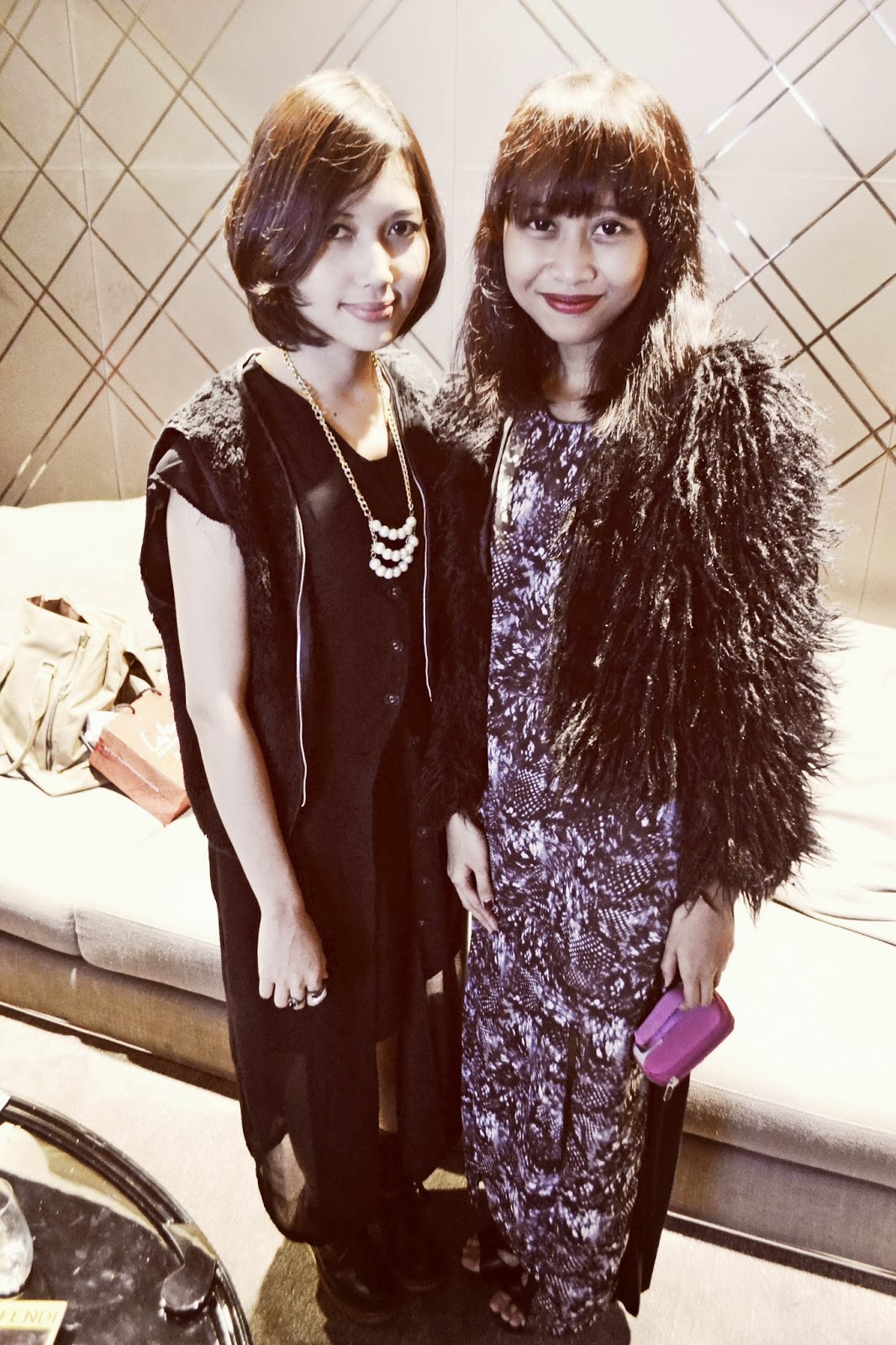
here they are, from left to right - Amanda, Prilly, Nissa (but we call her 'Arab' :p), Vanya, and Fimel. Ah I love these girls so much, thank you for being here there and around <3
 and here is the detail of my outfit:


Vintage lace shirt - Accent, Hairpiece and belt - unbranded, Vintage pastel skirt - thrift store, Dots printed socks - unbranded, Clogs - Adorable Projects

Thursday, January 9, 2014

The Interpretation of Literature

The determination of literature is always started with a question about its factuality, about how it is functioned and applied to the human relation, or to the very basic, about its purest definition as knowledge, as one of the fields of human study. However, many thinkers, from the classic theorist to the modernist have been very often giving their voices speaking over these regulations about literature’s formal authenticity, there is not even one has successfully made his argumentations up as a foundation underlying the every thinker’s critical perspectives about literature itself. The simplest analytical mind is certainly reasonable to be addressed to the old theorist Plato and Aristotele, as like what Mitchell says in his Representation that both of those literary theory founding fathers just “regarded literature as simply one form of representation.” Catherine Belsey makes it clearer by speaking in Constructing the Subject: Deconstructing the Text, if literature is a form of representation, then what is particular thing which is represented? She notes “literature represents the myths and imaginary versions of real social relationships...”, that in literature is just about the idea, the imagination of human’s reality, as to Althusser literature is “a system of representation concerning the real relations in which people live. But what is represented in ideology is not the system of the real relations which govern the existence of individuals, but the imaginary relation of those individuals to the real relations in which they live”, that literature is considered to be more ideological with only an image as a thing which is represented in it.
Mitchell goes further talking about representation and literature, that he says literature is not just that simple formation of representation of a general thing, or as a “representation of life” because of,  there will always be an ideology which is consisted, that it is indeed literature ”can never be completely divorced from political and ideological questions.” That to make a generalization, as how to make a consideration for “life” to be possibly represented through literature, is almost very unlikely to occur. Paul de Man has argued why literature will never work the generalization out, that he says in his Resistance to Theory, because literature is not a theory, it owns the normative principles which are “...cultural and ideological rather than theoretical.” If literature is a theory, the generalization may certainty be suitable, but, once it is related to what have theorists been said before, that literature is basically more ideological because it constitutes one-self’s ideology, which makes the understanding of literature as a theory, is not true.   

Monicha Nelis

Monday, January 6, 2014

An Argumentation of The Idea: The Relation between Woman-Writing In Literature

Literature, for it is either, as the never-stopped argumentative speculation in defining its meaning as a theory, of argumentations before issues of what is truth or just merely considered as either a myth or a fiction, or, about life of human being which is somehow regarded to be represented as an image ( catherine belsey ) in it as if literature is as a significant formation as what Mitchell notes “...then representation is exactly the place where “life”,...gets into the literary work.”, is truthfully considered to have its own relation as a medium or significantly a place to one’s ideology as a personal consistency as what Paul de Man argues that literature towards the integrity of a social and historical self rather than towards the impersonal consistency...”, which, that ”a social and historical self”, a “personality”, is viewed as a reasonable matter of literature in creating the identity, as to what Foucault says identity is a self-made creation depends on a person’s own “bio power”.
Oscar Wilde, a young and remarkable playwright over the era of Victorian-late has fascinatingly created a medium of expressions of what is called identity, through many of Wilde’s remarkable English playwrights. To be more significant, Oscar Wilde’s Woman of No Importance (1893) shows his particular tendency in building the identity through his work of drama, that, it is hereby viewed by the side of feminist criticism that Wilde truly makes that men domination in western be visible enough to make a disgraceful view for woman, as represented in one of its line by the character of Lady Stutfield, “Ah! The world was made for men not for woman.” (p.9) In western’s patriarchal culture, woman does not allowed to do such similar thing as what man can do, because of, the world is  represented not to made for woman. Gilbert and Gubar’s The Madwoman in the Attic constructs the idea of women’s incapability to present their selves to society through literature. Women lost their power of defining their selves as a subject of authority, in this case when she turned to be a writer or a poet.  “Thus the "anxiety of influence" that a male poet experiences is. felt by a female poet as an  even  more primary "anxiety of authorship"-a radical fear that she cannot create, that because she can never become a "precursor" the act of writing will isolate or destroy. “Literature in a history of western was never authorized to a ‘second sex’ – by what Mitchell calls "the inferiorized and 'alternative' (second sex) psychology of women under patriarchy.", and the literature itself was a very male-dominated. The power of men in the western literature had erased woman’s equality in writing as what Cixous’s “writing is at once too high, too great for you, it's reserved for the great-that is, for "great men" , that woman loses her right to be equally viewed as great as men in writing. 
However Wilde’s Woman of No Importance has also  been so differ about this kind of view that if writing has been so absolutely regarded as man’s signature manners, then why in such one of this 19th century’s western remarkable play, there is still a given-part to an idea of woman who writes down the letters in a piece of paper like what the character of Mrs. Arbuthnot does very gracefully under her consciousness, “She...Writes a beautiful hand, too, so large, so firm.” The play insists that this Idea of woman who does a handwritten-text shall be viewed as a very clear representation that writing is particularly done as not only an absolute matter of man’s masculinity but that “...beautiful hand...so large, so firm” is somehow responsible to be viewed as a woman’s textual form of femininity also. In Wilde’s Woman of No Importance, the argumentation grows up more arguable related to what old critics have pointed out about the relation between man’s superior power in western’s literature and their claim of writting as an absolute masculinity, that there is lied an irony represented through, “What a curious handwriting! It reminds me of the handwriting of a woman I used to know years ago” (p.20), that if writing is inappropriate to woman then how is that possible to define an inappropriate thing is fascinatingly able to reform the identity of oneself only by her handwriting?   

The difference class of sexuality, woman as what is quoted as ‘second sex’, loses the acclaim value of being the authentic writer for her authentic work referred to the dominant authority of male. However it gives a different perception here to Oscar Wilde, who have been popularly known as one of the most remarkable London’s playwrights that most of his works are done by holding that a value of femininity, represents the idea of a woman in that era of 19th century.

The literary authority has never been addressed to the female sex, as critics Gibert and Gubart give the idea of how impossible it is, “the woman writer substitutes what we have called an "anxiety of authorship," an anxiety built from complex and often only barely conscious fears of that authority which seems to the female Ilrtist .to . be by definition· inappropriate., to her sex.” It indicates that to act as a writer or to write something, woman seemed to have been mistaken herself as a woman, referring to what is inappropriate to her. However, a representation against this view is appeared again by Oscar Wilde in one of his nowadays-regarded masterpiece play, The Importance of being Ernest (1895), the character of Cecily is built as an young, admirable, fully educated girl who at her 18th ages she is so powerfully appeared to be a character of a girl who writes a diary about her everyday life. The diary is necessary used as a symbol by Wilde to represent the idea that woman has a condition of doing a right thing to have an act of writing;
ALGERNON
Do you really keep a diary? I'd give anything to look at it.
May I?
CECILY
Oh no.
(Puts her hand over it)
You see, it is simply a very young girl's record of her own
thoughts and impressions, and consequently meant for
publication. When it appears in volume form I hope you will order a copy.   

 An inappropriate manner to woman is in the 19th century, when she is likely be bounded with a creativity that to write one must have a creativity, that woman having a creativity is regarded to make her way out from woman’s nature, she is asked to be as pure as an “angel”, or if not she will be tragically regarded as “active monster” by what Gibert & Gubar notes, “It is debilitating to be any woman in a society where women are warned that if they do not behave like angels they must be monsters.” However this inequality is contrastingly represented in a very different view that in Wilde’s The Importance of being Ernest, the character of Cecily is ideally treated very well by her society, that to commit in writing a diary does not bring her into the “illness”, that the idea of her as an upper class woman who writes is even more extended to be more admirable, that to the character of Algernon, a young and wealthy man, Cecily is;

 “... the sweetest, dearest, prettiest girl in the whole world.”

 It is perhaps that Cecily ‘s characterization has constructed another point of view of men-woman’s masculine-feminine, that writing is not that whole performance only addressed to a man, not also be permanently considered as a total form of masculinity, but there is also the idea that woman has been fundamentally built to be likely committing herself for a dishonor manner while she writes, as feminist Helene Cixous on her most influential work The Laugh of the Medusa (1976), had been sexually analogized writing is equally as shameful as masturbating to woman, “...Because you punished yourself for writing, because you didn't go all the way; or because you wrote, irresistibly, as when we would masturbate in secret...” and this idea is also bounded to the character of Cecily that she does write, indeed, but her power is symbolized in a form of diary which at society, diary is generally known as “secret”, a very personal account, a secret not to get known by another person;
 CECILY
I keep a diary in order to enter the wonderful secrets of my life.

that she makes her power to be hidden, and this is responsible to be related to the idea which is noted before, the idea that writing is “it's "silly."  However if writing is as similar as “silly”, why do woman still need to do thing which has been called “silly”? In her arguments, Cixous had been pointed out so clearly that, “By writing herself, woman will return to the body.”  She needs, as a living creature, to own her power, that, for instance, not to write means not to own a power and be selfless. Not writing is defined that woman does not belong to her body, which to Judith Butler the body is, “a set of boundaries, individual, and social, politically signified and maintained”(Gender Trouble – 1990), because her body has been taken by the “great” and if not writing, woman would not experiencing to live in her “real” existence as a woman.
However, if woman needs to write to speak up her voices for taking back her existence again over the man, it is bounded with a question of how is it possible to be as simple as that while the action of writing itself has never been addressed to woman? It reminds our memory back to what Gibert & Gubar argued about the 18th-19th century woman’s “anxiety of authorship” in defining the idea of woman as a writer, that there is none of a person who deserves the title of author/writer but only to the man, as if there is woman who writes, her action will be defined as an imitation, to imitates a man, to be as what is shown by Homi Bhabha on his Of Mimicry and Man, that woman is, “almost the same, but not quite” with the man whose power is  a dominant power of the society, since the very past time of western’s literature history.      

References
1.       Manis, Jim.  A Woman of No Importance by Oscar Wilde, The Electronic Classics Series. Pennsylvania State University, 2006.
2.       Wilde, Oscar, and Alyssa Harad. The importance of being earnest and other plays. SimonandSchuster. com, 2005.
3.       Sandra, Gilbert, and Susan Gubar. "The Madwoman in the Attic: The Woman Writer and the Nineteenth-Century Literary Imagination." (1979): 493.
4.       Cixous, Hélène, Keith Cohen, and Paula Cohen. "The laugh of the Medusa."Signs 1.4 (1976): 875-893.
5.       De Man, Paul. "The resistance to theory." Yale French Studies 63 (1982): 3-20.
6.       Mitchell
7.       Butler, Judith. Gender trouble. routledge, 1999.
8.       Bhabha, Homi. "Of mimicry and man: the ambivalence of colonial discourse."October 28 (1984): 125-133.


Monicha Nelis

Sunday, December 15, 2013

The Idea of Woman and Writing In Literature

Gilbert and Gubar’s The Madwoman in the Attic constructs the idea of women’s incapability to present their selves to society through literature. Women lost their power of defining their selves as a subject of authority, in this case when she turned to be a writer or a poet.  “Thus the "anxiety of influence" that a male poet experiences is. felt by a female poet as an  even  more primary "anxiety of authorship"-a radical fear that she cannot create, that because she can never become a "precursor" the act of writing will isolate or destroy. “Literature in a history of western was never authorized to a ‘second sex’ – by what Mitchell calls "the inferiorized and 'alternative' (second sex) psychology of women under patriarchy.", and the literature itself was a very male-dominated. The power of men in the western literature had erased woman’s equality as what Cixous’s “writing is at once too high, too great for you, it's reserved for the great-that is, for "great men" , that woman loses her right to be equally viewed as great as men in writing. The difference class of sexuality, woman as what is quoted as ‘second sex’, loses the acclaim value of being the authentic writer for her authentic work linked to the dominant authority of male. The literary authority has never been adressed to the female sex, as critics Gibert and Gubart give the idea of how impossible it is, the woman writer substitutes what we have called an "anxiety of authorship," an anxiety.built from complex and often only barely conscious fears of that authority which seems to the female Ilrtist .to . be by definition· inappropriate., to her sex.” It indicates that to act as a writter or to write something, woman seemed to have been mistaken herself as a woman, referring to what is inappropriate to her. Woman has been fundamentally built to be likely committing herself for a dishonor manner while she writes, as feminist Helene Cixous on her most influential work The Laugh of the Medusa (1976), had been sexually analogized writing is equally as shameful as masturbating to woman, “...Because you punished yourself for writing, because you didn't go all the way; or because you wrote, irresistibly, as when we would masturbate in secret...” that writing is it's "silly."  However if writing is as similar as “silly”, why do woman still need to do thing which has been called “silly” ? In her arguments, Cixous had been pointed out so clearly that, “By writing herself, woman will return to the body.” She needs, as a living creature, to own her power, that, for instance, not to write means to own a power and be selfless. Not writing means that woman does not belong to her body, which to Judith Butler the body is, “a set of boundaries, individual, and social, politically signified and maintained”( Gender Trouble – 1990 ), because her body has been taken by the “great” and if not writing, woman would not experiencing to live in her “real” existence as a woman.
However, if woman needs to write to speak up her voices for taking back her existence again over the man, it is bounded with a question of how is it possible to be as simple as that while the action of writing itself has never been addressed to woman, reminds our memory back to what Gibert & Gubar argued about the 18th-19th century woman’s “anxiety of authorship” in defining the idea of woman as a writer, that there is none of a person who deserves the title of author/writer but only to the man, as if there is woman who writes, her action will be defined as an imitation, to imitates a man, to be as what is shown by Homi Bhabha on his Of Mimicry and Man, that woman is,almost the same, but not quite” with the man whose power is  a dominant power of the society, since the past time of western’s literature history.      

Monicha Nelis  

Monday, October 14, 2013

Classy Hologram

Hello,
This is the time for outfit post again, so happy finally :)! A very cool-futuristic hologram clutch I got from Kayi, click here to see their collection! and anyway I'd like to say thank you so much because these have been the 2nd time they gave me very gorgeous gifts hehe. Well, for me clutch is always classy, but for the hologram one, it is kinda different. Then, I tried to create a mixing between classic and futuristic, through the whole outfit and the clutch itself. Something classy is always wonderful for me and that's what underlying the idea. So here we go!


White shirt, Black Dress - Thrift Store, Denim top - DIY, Polkadot Scarf - DIY, Leather Bag - Thrift Store, Clutch - Kayi, Wedges - Adorable Project
There are many magical things happened these lately, and I thank God for putting a smile on my face always. Thank you for visiting! Good night!
Best love, 
Monicha

Thursday, September 26, 2013

Fashion Blogger Gathering by Galeries Lafayette and NYLON Indonesia

Good Morning!
May you all have a happy day at all :)

Today, I'd like to tell you a very exciting story I experienced on 24th & 25th September in Galeries Lafayette, Pacific Place, Jakarta. What was it? and How was it going? It was actually a pleasureable gathering along with the 20 Indonesian fashion bloggers who had been invited by NYLON and Galeries Lafayette to join the event.


But not only a gathering, the event also provided us a very exciting moment when in the 1st day of the event, we had to compete each other first, for a styling competition. The styling competition was separated into 4 groups which every each person in the group had to choose one of the three represented style themes, those are, Smokey Rock, Mixology, and Cocktail Time. I actually did not know how was it going on my mind, when Kak Vera from Galeries Lafayette asked me what kind of style I'd like to represent, and I was just suddenly said that I choosed the Smokey Rock theme, Lol. However, either it is based on my unconcious interest or not, something which is dark and bold are going to be my addiction in these current times. I know that I've just fallen too deep in pastel coloring, and to be something which is out of my range, is sometimes very exciting. Well, unfortunately I was not able to capture a lot of good pictures for the first day because I was very busy choosing the stuffs I need, but Galeries Lafayette is such a very heavenly shopping place where you can choose the beauty and/or fashion products you need, from the luxurious fashion couture till a high-street one.

The first group (Bethany Putri, Arnold, and me) that I choosed to join with was started the competition in 10 o'clock in the morning, I always prefer to work in morning rather than at any other times, but the traffic killed my time that I just came to the place when there was only a hour left, fyuh. And this is how I style for Smokey Rock, I mostly choosed Zadig & Voltaire from top, shirt, long dress, clucth and accessories, also white blazer from Maje and a pair of leather boots to make it complete.


The 2nd day of the event was held in the evening, and we were required to give  a 4 minute presentation about the concept of the style we created. I personally feel nervous and confuse at the same time, because I have to compete all the famous and great fashion blogger, furthermore because this competition was judged by NYLON's fashion and beauty editor, Anindya Devy, Mrs. Sarah Sugandy from Galeries Lafayette, and the editor in chief of NYLON Magz Indonesia was also here! Just like 'wow' but yet exciting! I hoped I can give my best presentation as well.

Here is one of my favorite idol, Kak Genu when he was doing his presentation, he is amazing!
Judging team : Sarah Sugandy & Anindya Devy
After the presentation session was over, we were pleased to relax our selfs, to taste some delicious foods and drinks and also took a lot of photos, yes we just had a great time there :). 

The BIG thing happened when the time for winner announcement came! I just still can't believe that the judging team took me as the 2nd winner of the competition! GOD, it was really a big surprise and a big present also for me! I just can't thank enough for everything, just thank you and thank you so much for NYLON and Galeries Lafayette! <3 <3. Another 2nd winner is Tara Amelz and the 1st winner is June Paski :D!
But for me, all of the styles are super stylish and it would be very hard for the judges to decide, because all the fashion bloggers were very talented, and that's why I just still can't believe that I won hehe. Just click here to see the detail news of the event. 


with Kak Elco :D
with Tara and June
my addiction to June's platform!
Olivia and kak Genu
 
with kak Ario! :D
Arnold, Mitha, and Chaterine 
with Lulut :)
 And here they are all the bloggers along with the Editor in Chief of NYLON Indonesia, Mrs. Ein Halid!


After all, I'd like to say thank you once again, and I promise my self to study more and more to be better than before, thank you so much for the opportunity and thanks God for blessing me as always :)

Have a nice day
Monicha Nelis